Location >>
 Date:2026-06-24
Mandatory inspections to cover steel, cement, chemicals by 2027, phasing out inefficient equipment
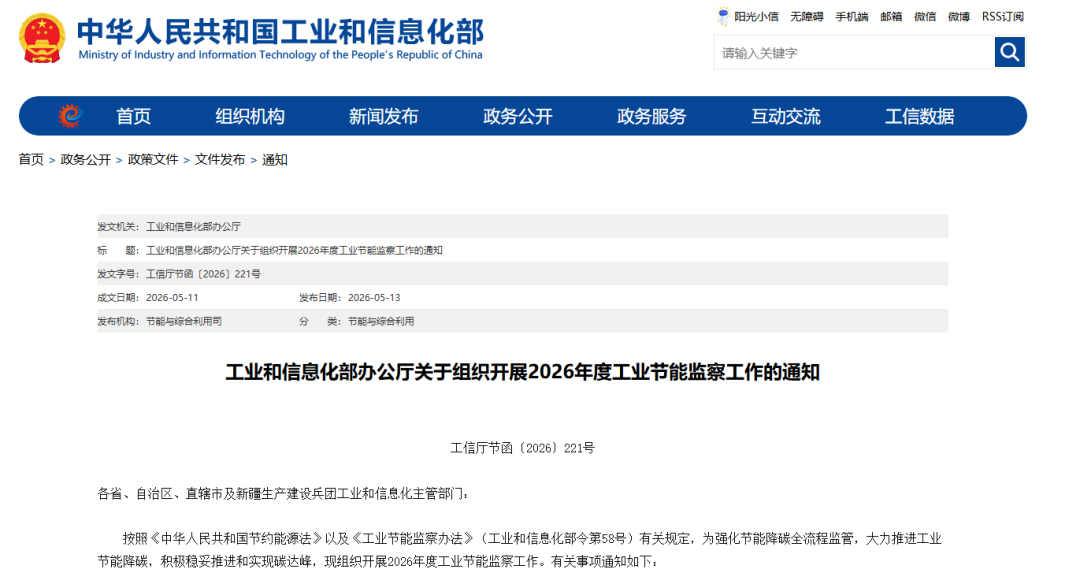
BEIJING – The Ministry of Industry and Information Technology (MIIT) has launched its 2026 annual industrial energy‑saving supervision campaign, with a sharpened focus on energy‑using equipment – particularly industrial boilers. The two‑year drive (2026–2027) will enforce full‑coverage inspections across energy‑intensive sectors, including steel, cement, chemicals, and non‑ferrous metals, compelling plants to retire sub‑standard boilers and accelerate the elimination of obsolete production capacity.
Far from a sporadic check, the initiative signals a systemic shift: MIIT is drawing a clear energy‑efficiency red line for the boiler industry and charting a mandatory roadmap for low‑carbon transformation. By combining blanket inspections with binding efficiency standards, the regulator is raising compliance barriers while nudging enterprises toward digitalised, carbon‑conscious operations.
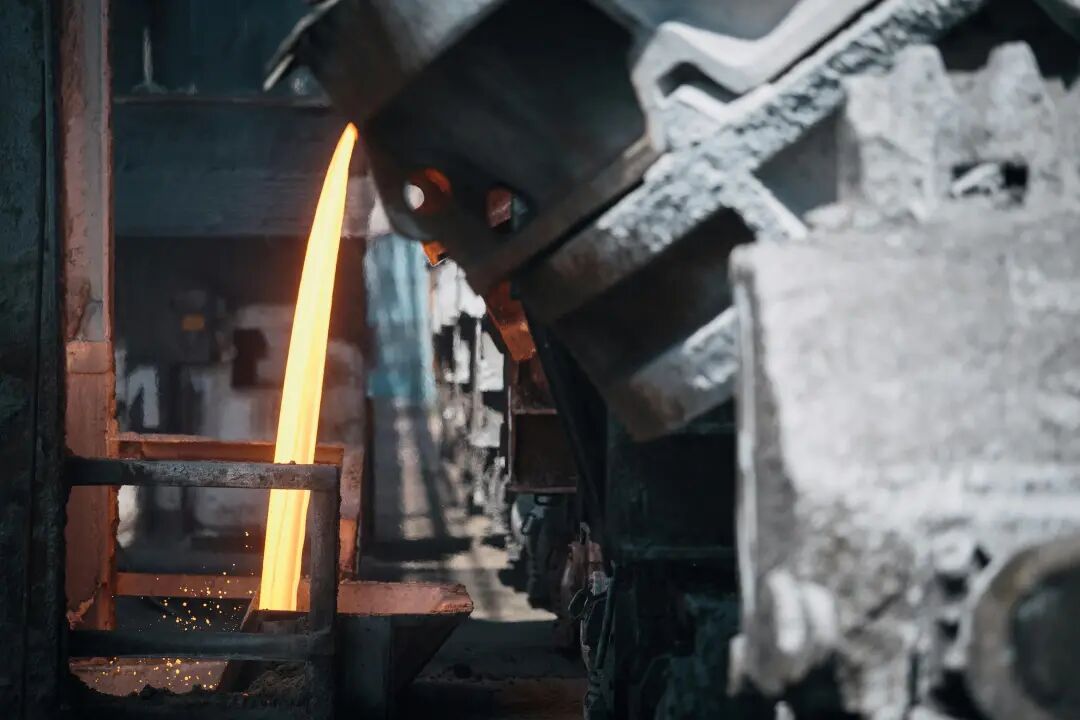
Full‑coverage audits for high‑energy industries
Under the first pillar of the plan, authorities will conduct energy‑efficiency audits for 14 major sectors – including steel, synthetic ammonia, oil refining, ethylene, caustic soda, soda ash, methanol, PVC, electrolytic aluminium, industrial silicon, cement, flat glass, building/ceramic tiles, and data centre infrastructure. Inspections will be benchmarked against mandatory industry energy‑consumption limits and the official “benchmark” and “baseline” efficiency levels. All enterprises in these sectors must be covered by the end of 2027, with PVC producers using the calcium carbide process facing a full sweep in 2026.
For industrial boilers, this means a first‑ever systematic efficiency validation across heavy industries. The era of lax energy use and aged boiler fleets is ending, as the entry threshold for the sector is now firmly tied to verified energy performance.
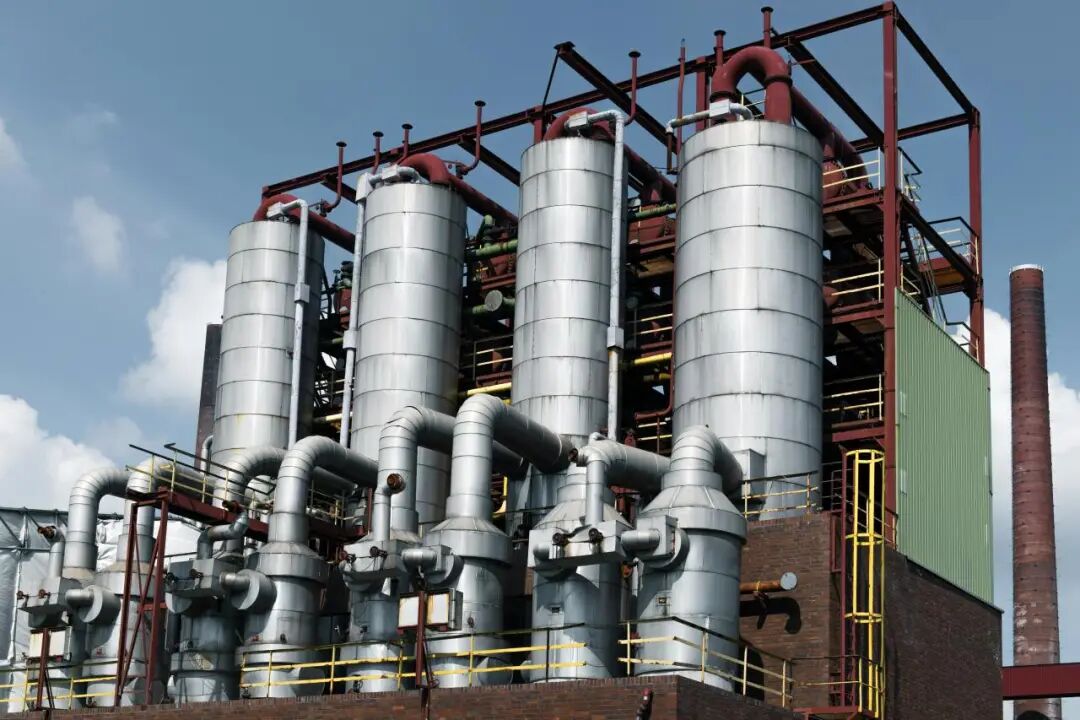
Supply‑chain ripple effects spur boiler retrofits
The supervision also extends to strategic emerging industries. A separate track will audit key manufacturing chains – photovoltaic modules, wind turbines, power and storage batteries, and water‑electrolysis hydrogen‑production equipment – covering raw material processing, production, and final assembly.
Because boilers serve as critical heat‑source equipment in industrial processes, their efficiency directly affects the carbon footprint of entire supply chains. This interconnected scrutiny will push manufacturers to upgrade boiler systems, ensuring they align with the low‑carbon expectations of upstream and downstream partners.
Industrial boilers singled out – inefficient units face mandatory phase‑out
Crucially, the directive explicitly lists industrial boilers among priority equipment subject to mandatory energy‑performance standards. Inspectors will verify compliance with the latest efficiency thresholds (including advanced, energy‑saving, and entry levels). Any boiler that fails to meet the minimum mandatory standard will trigger a legally binding order for replacement or retrofit – with a clear deadline.
This marks a turning point: the “phase‑out of inefficient boilers” has shifted from industry guidance to enforceable regulation. The move will accelerate market consolidation, directing demand toward high‑efficiency, energy‑saving products and squeezing out outdated suppliers.
Joint enforcement and a “one‑violation, multi‑restriction” regime
To strengthen deterrence, MIIT is calling for inter‑agency coordination. The campaign will:
-
Publish violator names and inspection results to the public.
-
Establish a joint‑punishment mechanism with other government departments, creating a closed‑loop regulatory system where non‑compliance carries consequences across credit, procurement, and subsidies.
The ministry also emphasises “standardised, enterprise‑friendly” enforcement to reduce unnecessary burdens, while encouraging local authorities to adopt third‑party expert support and multi‑level (provincial‑city‑county) joint inspections for greater efficiency.
Digital tools and carbon‑data integration drive future compliance
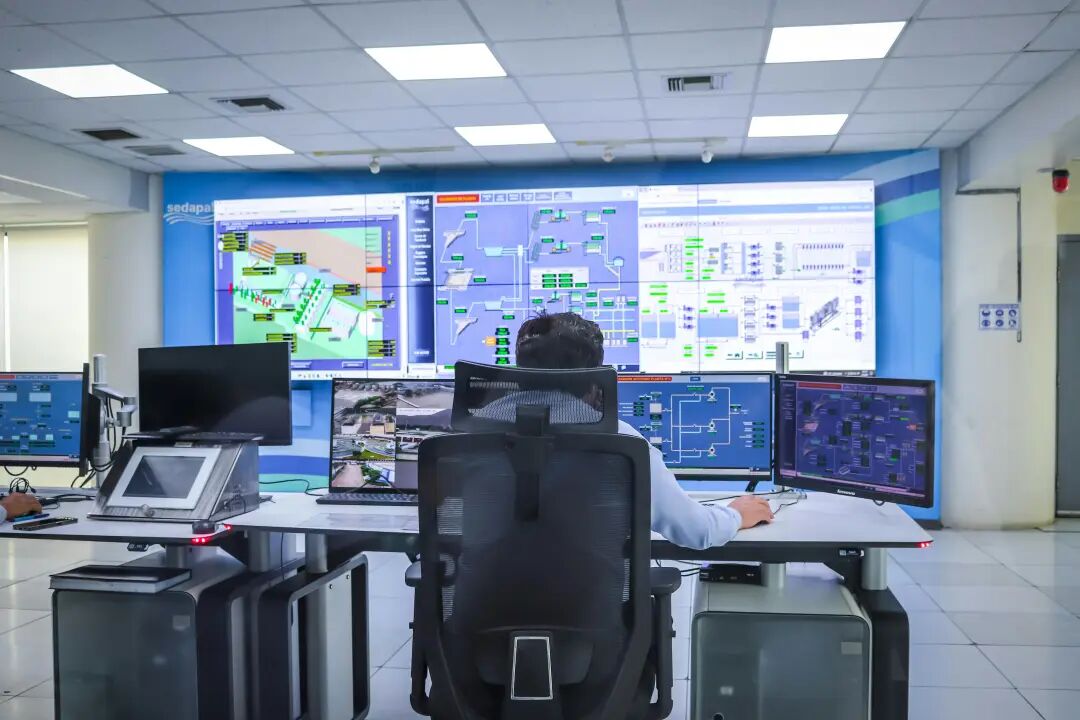
For boiler operators, the new rules point to a clear technical direction. MIIT is promoting the use of digital energy‑carbon management centres and online reporting platforms for inspection results. Companies will be expected to install real‑time monitoring systems that track fuel use, thermal efficiency, and emissions – moving from manual record‑keeping to intelligent, data‑driven optimisation.
Moreover, the ministry hints that inspection outcomes may soon be linked to corporate carbon accounting and product carbon‑footprint management. This paves the way for aligning energy audits with broader decarbonisation efforts, such as energy‑saving diagnostics and targeted retrofit programmes, creating a unified push for industrial green transformation.
Outlook: a decisive catalyst for industry overhaul
This is not a short‑term regulatory blitz but a foundational instrument to reshape China’s boiler sector. Companies that proactively invest in efficiency upgrades, digital monitoring, and low‑carbon design will gain a competitive edge; those that delay risk being squeezed out by both regulation and market forces.
The strengthened oversight also sets the stage for industry dialogue – the topic is expected to feature prominently at upcoming events such as the World Boiler Expo · Guangzhou (September 16–18, 2026), where stakeholders will debate implementation strategies and next‑generation boiler technologies.

Source: Ministry of Industry and Information Technology of the People’s Republic of China (public notices).